YOU NEED TASTE: The skill ai can’t replace
“Good taste is the art of avoiding the obvious”
As generative AI lowers the cost of creating drafts, prototypes, and written artifacts, the traditional bottlenecks of product development — execution, coordination, and production time — are losing their importance. When ideation and draft creation become inexpensive and abundant, product teams must shift their focus from generating options to evaluating them.
Recent work from McKinsey suggests that developers can complete certain coding tasks up to 2× faster using generative AI tools (McKinsey – *Unleashing developer productivity with generative AI and The economic potential of generative AI). Other emerging research posits that knowledge work is moving from creation toward curation (see “Creator to Curator – The Impact of Generative AI on Knowledge Work”).
Taste is the capacity to sort through endless plausible ideas and elevate the ones that deserve real attention. With abundance, taste becomes the constraint.
MOVING From Execution to Evaluation
Historically, a product manager's value has been tied to their execution speed. Even with a clear design, turning ideas into shipped software required careful coordination, detailed PRDs, well thought through test cases, and lots of engineering time. A PM that could move this machinery faster delivered obvious, immediate value.
Now, generative tools can handle a surprising amount of the work:
Drafting specs and product briefs
Mocking flows or UX variants
Outlining strategies, narratives, and comms
Generating test plans or edge-case lists
While these outputs aren’t final, they are often coherent enough to serve as starting points.
As IBM and others have reported, the future of work sees AI not as pure automation, but as **augmentation**, with 4 in 5 executives expecting AI to change roles and skills rather than simply replace them (see: IBM – Augmented workforce for an automated, AI-driven world and IBM – New study reveals how AI is changing work).
Put simply: it’s getting easier to create options. The scarce, value-creating work is moving toward **deciding which options deserve attention**.
This shifts the PM role from producer of artifacts to editor of possibilities.
What slows teams down now is not the ability to create options but the ability to discern them.
That is the work of taste.
Defining Taste in a Product Context
Taste in product management is the ability to rapidly judge whether an idea, design, or narrative is directionally right. It’s the instinct to see through the noise and assess:
Does this solve an actual problem, or does it introduce new ones?
Is this consistent with what we’re building and why it matters?
Does this make sense in the context of what users already expect?
Taste tends to appear through three behaviors:
Rapid contextual synthesis People with strong taste require little exposition to determine whether something “fits.” They can often look at a single screen or narrative and tell whether it is on- or off-axis.
Implicit constraint-setting When AI tools casually propose “more” — more screens, more features, more explanatory copy — taste is the judgment that recognizes when subtraction is the correct move. It protects the core experience from being diluted.
Evaluating qualitative coherence AI-generated designs or explanations often follow correct patterns but feel subtly inconsistent or hollow. They’re plausible but not compelling. Humans with taste notice these gaps before the metrics reveal them, in the same way that experienced reviewers can sense when a story or interface is structurally sound but emotionally flat.
Taste is not mystical. It’s **accumulated pattern recognition** shaped by exposure, critique, and feedback loops over time.
Why Data Alone Is INSufficient
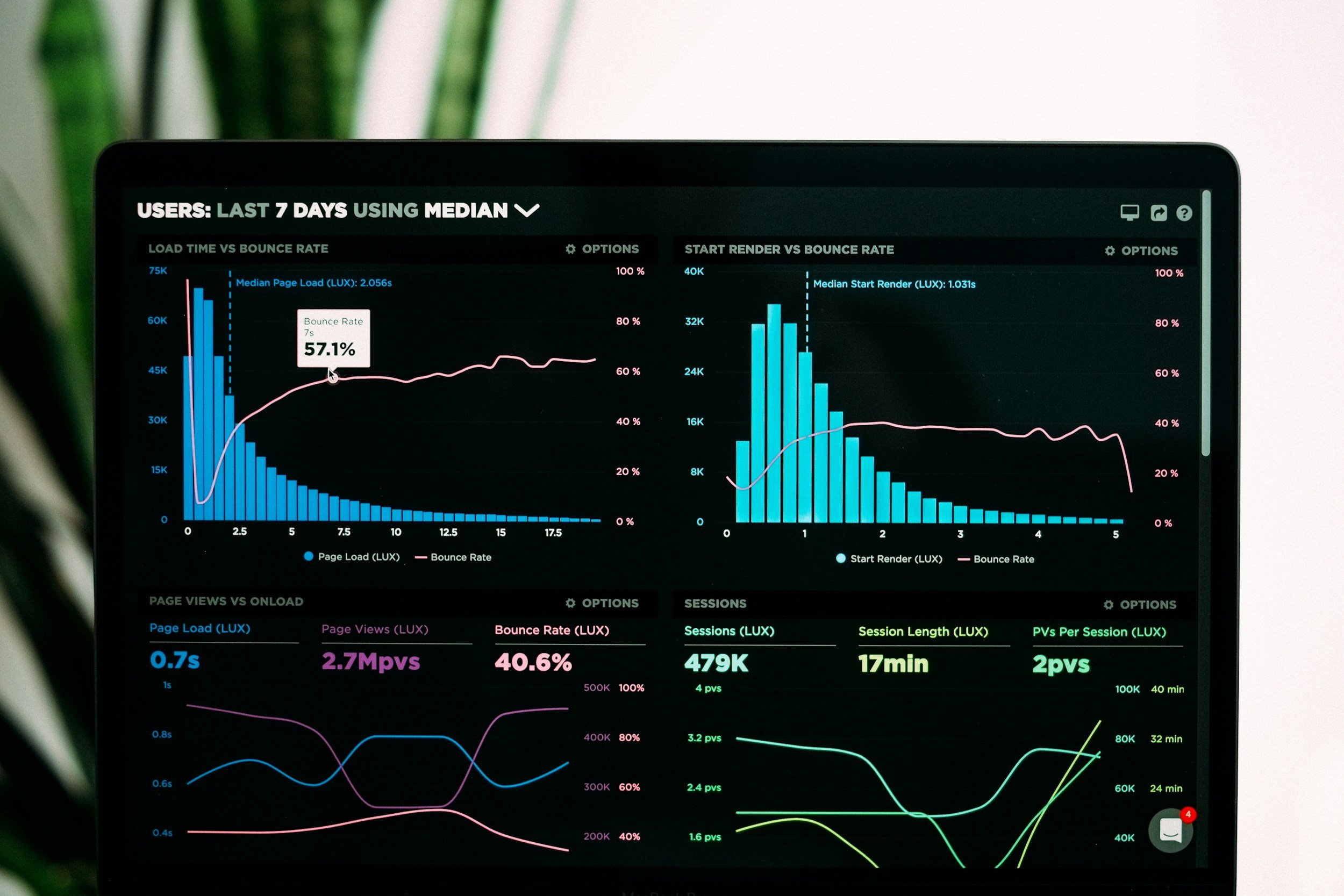
Data remains critical, but in an environment where AI models replicate historical patterns and optimization loops favor incremental gains, data can unintentionally reinforce homogeneity.
We already see early evidence of this in web and product design. A 2021 mixed-methods study, Investigating the Homogenization of Web Design, used computer vision and a large corpus of website screenshots to show that visual designs have become significantly more similar since 2007, with average layout distance dropping by over 30%. The authors attribute this, in part, to shared templates, frameworks, and centralized design resources (see: CHI 2021 paper – Investigating the Homogenization of Web Design).
As generative AI models are trained largely on this existing design landscape, they risk amplifying the effect. They tend to produce more of what already exists.
If teams rely heavily on:
model output for ideation, and
short-term empirical optimization for selection,
their products may drift toward the median of existing solutions: superficially polished, statistically validated, and hard to distinguish from competitors.
Taste acts as a counterforce—a source of intentional variation that can pull teams away from the gravitational center of statistical averages. It allows humans to say, “We know this is slightly weirder, but it’s more aligned with who we are and what our users actually value.”
HOW TO DEVELOP Taste
One reliable path to cultivating taste is expanding the set of reference points beyond the immediate field.
A quick tangent: I love photography. You can actually see a selection of my favorite photos in the personal section of this site. Over the years, there are a few photographers I’ve consistently looked up to: Art Wolfe, Annie Leibovitz, and Chase Jarvis among them. I’ve spent a lot of time reading and watching their work to understand how they create images that feel both intentional and alive.
In his writing and interviews, Jarvis often emphasizes collaboration and cross-pollination: working with people outside your niche and borrowing ideas from their worlds in order to stretch your own (see: “A Little Known Secret About Creativity” – Chase Jarvis).
Jarvis’ point was not about software, but the principle fits neatly with product work today.
If PMs restrict themselves to analyzing other SaaS products — or worse, rely entirely on AI-generated variants of those products — they limit their input range to patterns the models have already learned to reproduce.
By contrast, PMs who routinely study:
hospitality and service design
physical interfaces and industrial design
narrative structure in film and long form writing
classic visual systems (e.g. Bauhaus, Swiss typography)
tend to develop richer internal models. These broader references become useful when evaluating AI-generated ideas, allowing humans to detect coherence or potential that a purely software-trained model would not prioritize.
This isn’t creativity for its own sake; it’s about **enriching the mental training data** that supports good judgment.
Practical Implications for PM Workflows
Use AI for breadth, rely on humans for depth. Let AI generate a wide range of options — specs, flows, narratives, prototypes — but reserve human time and attention for the deeper work: determining which options are actually worth exploring, merging and refining drafts, and correcting tone, pacing, or clarity.
Early research on gen-AI in knowledge work (including studies with PMs specifically) highlights that the most effective setups keep humans in control of direction, not just reviewing outcomes (see: Generative AI in Knowledge Work: Design Implications for Human-AI Collaboration).
Maintain a wide reference library. Taste improves when you broaden your set of comparisons. Collect moments — digital or physical — that demonstrate unusually strong pacing, clarity, respect for users’ time, or simply a sense of “someone cared about this.” These become practical benchmarks during evaluation of AI output. You are curating your own internal dataset for taste, one that is richer and more varied than anything AI models currently train on.
These become benchmarks when evaluating AI output. In effect, you’re curating your own dataset for taste.
Protect emotional and experiential qualities, AI reliably handles structure; humans are still better at sensing: tone (patronizing vs. respectful), emotional load (anxious vs. calm flows), perceived intent (“are they trying to help me or push me?”).
Work from IBM and others on AI and the future of work frames this as a shift toward “values work” and human judgment about context, ethics, and user impact (see: IBM – AI and the Future of Work).
Preserve space for non-obvious decisions. Not all valuable product choices maximize short-term metrics or align with the most common patterns in the training data. Some rely on: a longer time horizon, a specific brand narrative, or a deliberate choice to be different. Taste-based calls should not replace data, but they should have room to exist alongside it.

Open Questions
Could future models approximate taste through preference modeling? As we get better at learning from human feedback and modeling subjective preferences, it’s plausible that future systems will internalize some aspects of taste.
How much will markets reward taste versus standardization? In some domains, standardization and predictability are more valuable than distinctiveness. It’s an empirical question of how often “better taste” translates into durable competitive advantage.
How do we ensure that “taste” does not become a proxy for unexamined bias? Taste is inherently subjective and context-dependent. Without discipline and diverse inputs, it can easily drift into personal preference dressed up as inevitability.
These questions require empirical exploration rather than assumption. Some early work at the intersection of generative AI and knowledge management argues explicitly for human-in-the-loop approaches that make these value judgments explicit rather than implicit (see: Kirchner et al. – Generative AI meets Knowledge Management).
“Style is the perfection of a point of view.”
Taste compresses context, recognizes coherence, and introduces intentional variation in a landscape where models default to the statistical center. The most reliable way to strengthen it is to widen the set of inputs that shape it — pulling not just from software, but from entirely different disciplines, much like Chase Jarvis advocates.
For now, taste remains one of the few distinctly human capabilities that continues to hold its value, even as AI rewrites nearly every other part of the workflow.
